
Piano nocturnes are strongly associated with Chopin and his 21 nocturnes, but John Field, who composed 18 of them, is credited with their invention in 1814. Liszt would later describe Field’s nocturnes as being as “soothing as the slow, measured rocking of a boat or the swinging of a hammock”.
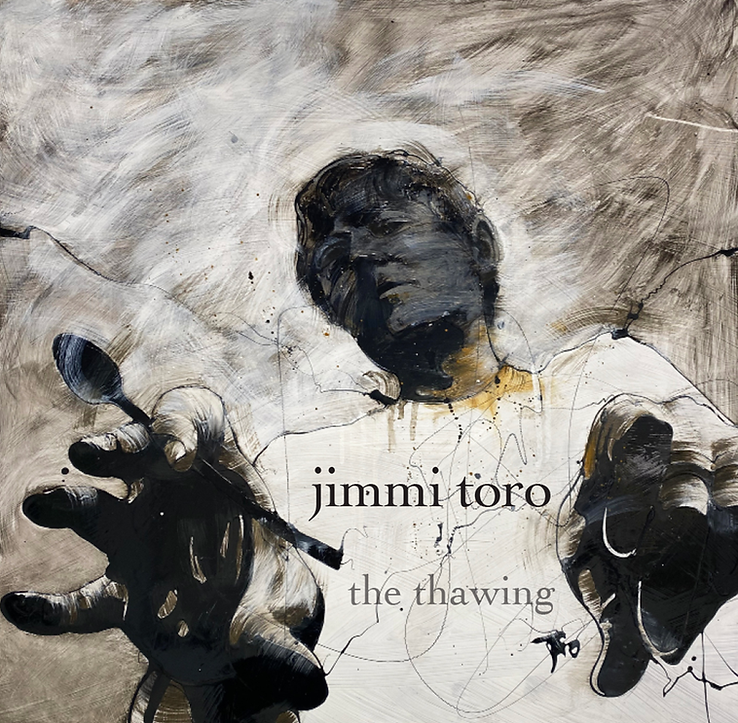
The Thawing
In the spirit of my favorite genre of music, or subgenre of classical music, I have composed an album of piano nocturnes which are traditionally expressive, and evocative of intimacy or melancholy. Nocturnes are defined more by their mood and texture than by their strict structural form. My 12 nocturnes delve deep into the emotions associated with extreme trauma and torture, the thawing out period sometime after the abuse, and the healing process that leads to what Carl Jung calls individuation, where a person is uniquely themselves, free from mass psychological conditioning, and deeply connected to humanity. Healed.
Currently, I have released two songs, THAW #6 and MANDALA #12, which you can listen to on my Bandcamp page. The others will be released over the weeks and months, followed by the full album.

Sign up to my Substack Newsletter and receive updates and access before new releases in art and music become public.


Inspiration for my song THAW
The Introduction: The Stasis of Dissonance
My composition, Thaw, opens in a state of tonal semi-paralysis. For the first twenty seconds, a series of slow, deliberate, and slightly dissonant chords establishes a landscape of permafrost. These chords represent the “freeze” response—a nervous system suspended in time. This slow, but deliberate, left-hand foundation is suddenly pierced by a solitary high F note. This note acts as a crystalline splinter of hope, cutting through the trauma. Its isolation and the high notes that follow create a sense of fragile skepticism; the melody is hopeful yet tonally “unsure,” mimicking the tentative steps of a survivor wondering if their safety is a hoax.
The Middle Movement: The Dance of the Lost Self
As the piece progresses, the left-hand cadence which mimicks a rhythmic ghost of traumatic memory, begins to interweave with the right-hand’s hopeful longing. I might call this the dance of the lost self, or a sonic mourning for the self that never was. A possible life unmarred by abuse. By 1:50, the piece enters a cycle of resolution and relapse. High, fluttering trills attempt to assert dominance, rising in a desperate search for light, only to succumb to a deeper, more complex mental dissonance as the music marches on. This reflects the non-linear nature of healing: three steps forward, and a terrifying slide back into the dark.
The Climax: From Stagnation to Primal Fire
At the 2:30 mark, the “thaw” accelerates. The tempo shifts into a precipitous accelerando, signaling the nervous system’s transition from “Freeze” to “Fight.” This is the appearance of primal rage. The music moves from the “drip” of melting ice to the roar of a turbulent river. This section is the sonic equivalent of slaying the dragon; a percussive, fiery reclamation of the right to exist. The dissonance here is no longer your prison; it is your weapon.
The Resolution: The Maternal Embrace
In the final sixty seconds, the turbulence exhausts itself. The drips turn into a flow of water, then a turbulent river, eventually making their way to the sea. The music begins a slow, somber descent into the piano’s lower registers, remaining dissonant, honoring the truth that we are never unscarred. The soft, tender, rubato phrasing concludes with the soft caress of a loving mother figure. It is the sound of a hurt child finally being delivered into the safety of their own embrace.